Post-Mission Survey Analysis: Volunteer Feedback Drives the Redesign
38 surveys sent, 14 responses. What station leads said about the forms, the workflow, and what to keep versus change before Laredo.
The Survey
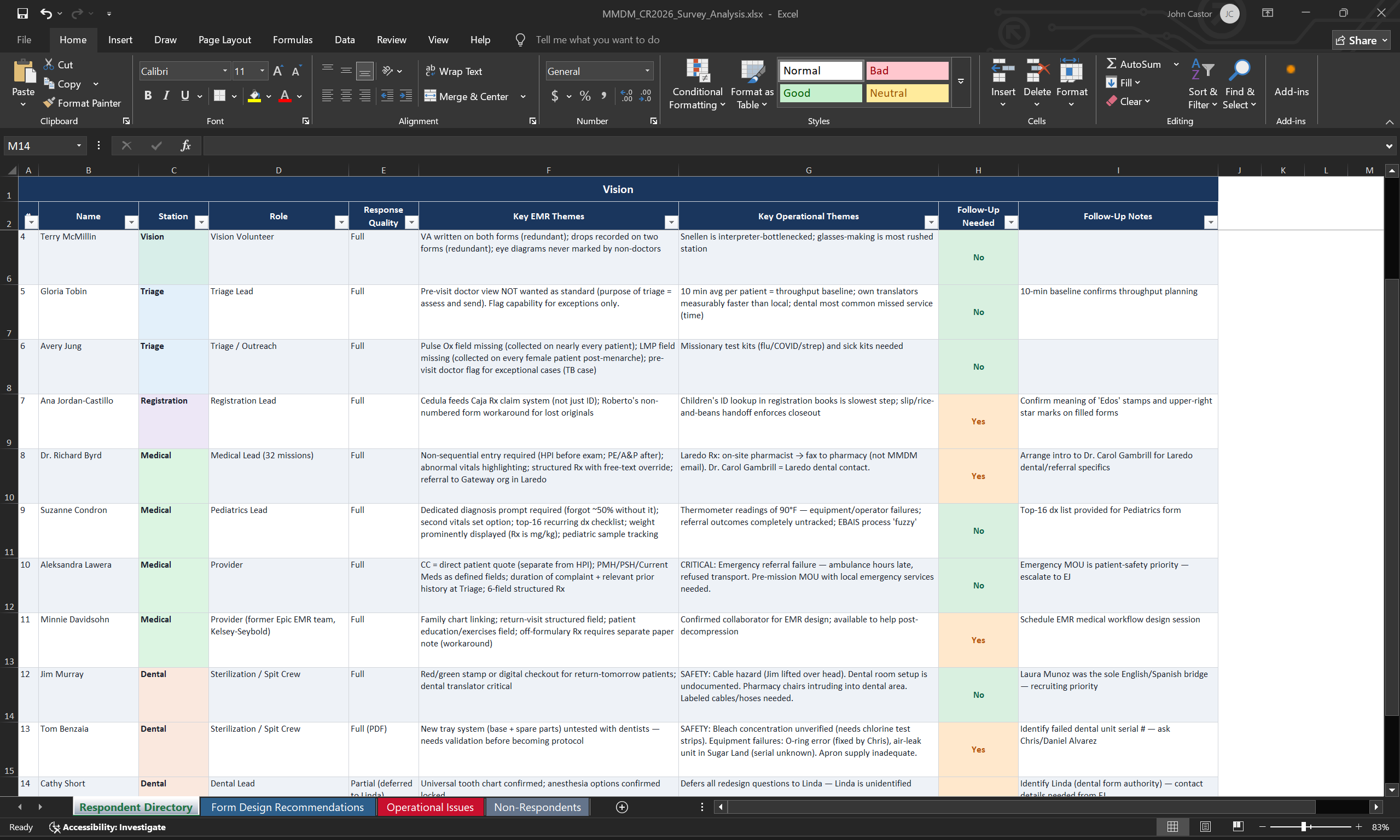
After Costa Rica, surveys went to all station leads and clinical volunteers. 38 sent, 14 responded: a 37% response rate for a post-mission voluntary survey from a team that had just returned from a week in the field. That is a reasonable return.
The goal was not to validate what had already been built. The goal was to identify what broke in practice that did not break in testing, and what the forms were missing that the paper forms had captured.
What the Data Said
The triage timing was consistent with estimates: approximately 10 minutes per patient through triage. The vision routing age cutoff change (from 60 to 55, made mid-mission) will be the default for the next deployment.
The medical station's diagnosis-prompt gap was confirmed by multiple respondents. The structured prescription block was reported as helpful. The non-sequential entry model (filling history before the exam, assessment after) matched how providers actually work.
Pediatrics feedback highlighted the importance of the sample-dispensing tracker. Without it, providers lost track of whether vitamins or topical antibiotics had been given to a patient by the third or fourth child in a family. The tracker was one of the most-mentioned additions.
The dental form's optional medical history section was not flagged as a problem. The optionality was the right call.
What Changes Before Laredo
The Laredo deployment requires a separate form configuration: no Cedula field, Medicaid Y/N on vision, mailing address capture, Prevent Blindness referral workflow, and X-ray room integration for dental. These are not modifications to the Costa Rica forms; they are a parallel configuration that the system will serve based on the active mission profile.
The dental tooth chart visual UI remains deferred but is now a named requirement for Laredo, not an aspiration. The dental lead's review of the current form has not yet happened; that is a scheduled pre-Laredo milestone.
What Stays
The paper-primary, evening-entry protocol stays for Laredo. It is the right operational model for a first-time deployment in a new jurisdiction. Going EMR-primary on the first Laredo mission would introduce too many simultaneous unknowns.
The private CA and per-device TLS trust model stays. It works. The firewall posture stays. The snapshot-backed baseline stays.
The recruiting and tech ops team buildout is now active: a Microsoft Forms skill-assessment questionnaire is live, and outreach is in progress at Houston-area colleges.